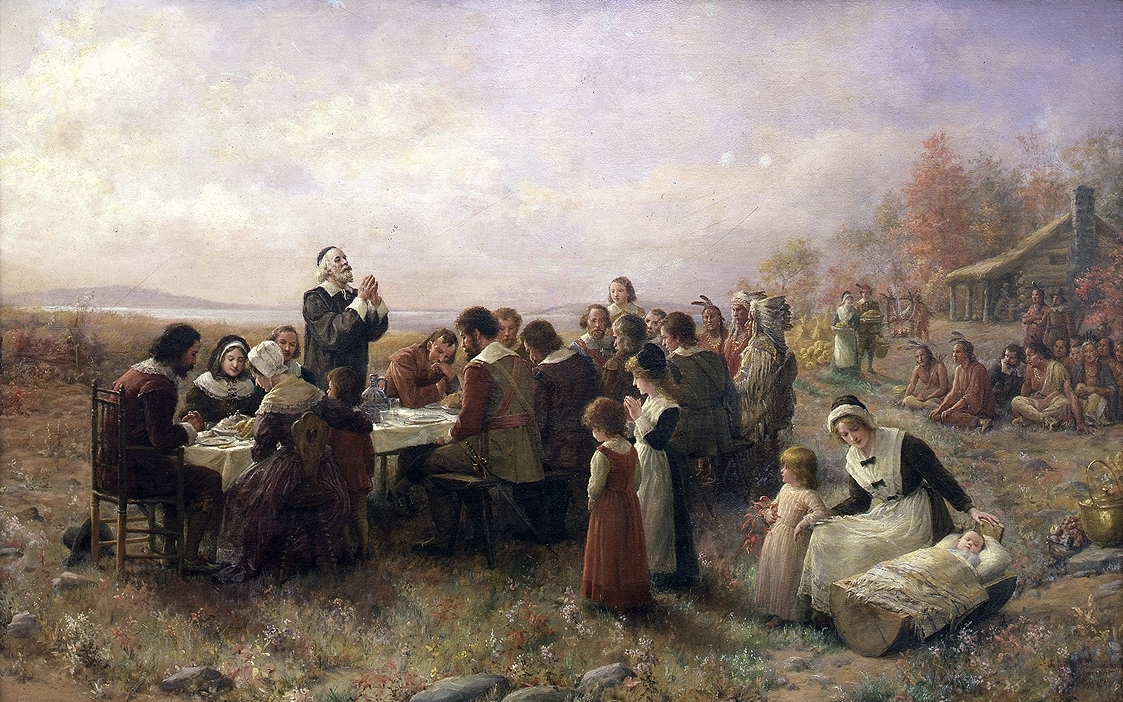
In 1863, President Lincoln wrote:
“I do, therefore, invite my fellow-citizens in every part of the United States, and also those who are at sea and those who are sojourning in foreign lands, to set apart and observe the last Thursday of November next as a Day of Thanksgiving and Praise to our beneficent Father who dwelleth in the heavens. And I recommend to them that, while offering up the ascriptions justly due to Him for such singular deliverances and blessings, they do also, with humble penitence for our national perverseness and disobedience, commend to His tender care all those who have become widows, orphans, mourners, or sufferers in the lamentable civil strife in which we are unavoidably engaged, and fervently implore the interposition of the Almighty hand to heal the wounds of the nation, and to restore it, as soon as may be consistent with the Divine purposes, to the full enjoyment of peace, harmony, tranquility, and union.”
Dismantling Traditional Narratives
It’s hard to sift tradition and find accurate history. The past is a mess and humanity does a poor job of holding tension. We want to be on the side of right. A clean narrative is easier than a complicated past. I guess that’s why everyone alters history as it’s recorded?
A few years prior to the pilgrims landing at Plymouth, a deadly epidemic killed over 70% of the Indigenous population in coastal New England. In March of 1621, Massasoit, leader of the Wampanoag confederacy, negotiated a mutual defense treaty with Governor Bradford. In exchange for food, knowledge, and protection, the English would assist the Wampanoag in defense against the Narragansett.
The Narragansett were the dominant Indigenous power in southern New England. The Wampanoag Confederation, devastated by the epidemic of 1616–1619, suddenly found themselves outnumbered and strategically exposed. The Narragansett exerted pressure on smaller groups through tribute, intimidation, and control of key resources. It wasn’t mob extortion, even though it kinda looked like it: the strongest nation made the rules, and everyone else had to calculate how to survive under them. (America has always looked like America?) Massasoit’s alliance with the English in 1621 makes more sense when you know more about the situation.
Gunfire Invitation
During a harvest celebration, the English were shooting their guns (‘Murica?). Believing their allies might be under attack, the Wampanoag arrived at the colony with approximately 90 warriors. After sorting out the misunderstanding, the warriors stayed and contributed food (5 deer) to the feast. The English harvest celebration of 1621 was a three-day, secular festival rooted in old English “harvest home” traditions. It included abundant eating, shooting guns, athletic games, and communal relief after a brutal year in which half of them died. It was not a religious thanksgiving, not an annual tradition, and not a planned intercultural feast. It was the English colonists blowing off steam after surviving long enough to bring in a crop and their allies showing up thinking they needed to fulfill political/military obligations. The three day feast consisted of venison, ducks, geese, corn, beans, squash, fish, eel, and shellfish.
Turkey Timeline
In the 1600s and 1700s, Puritan New England regularly held days of “thanksgiving,” but they weren’t feasts. They were religious days of fasting and prayer (a far cry from the glutinous affair nowadays) after major events: an end to drought, a military victory, or a successful harvest. They happened all year long, not just in November. The idea of a fall Thanksgiving festival developed much later, when New England society grew wealthier and more agricultural in the late 1700s and early 1800s. As the region stabilized, families began turning the annual post-harvest relief into a set communal tradition. By the time the young United States was forming its regional identities, New England alone had an annual Thanksgiving, and it had nothing to do with the Pilgrims—just local custom.
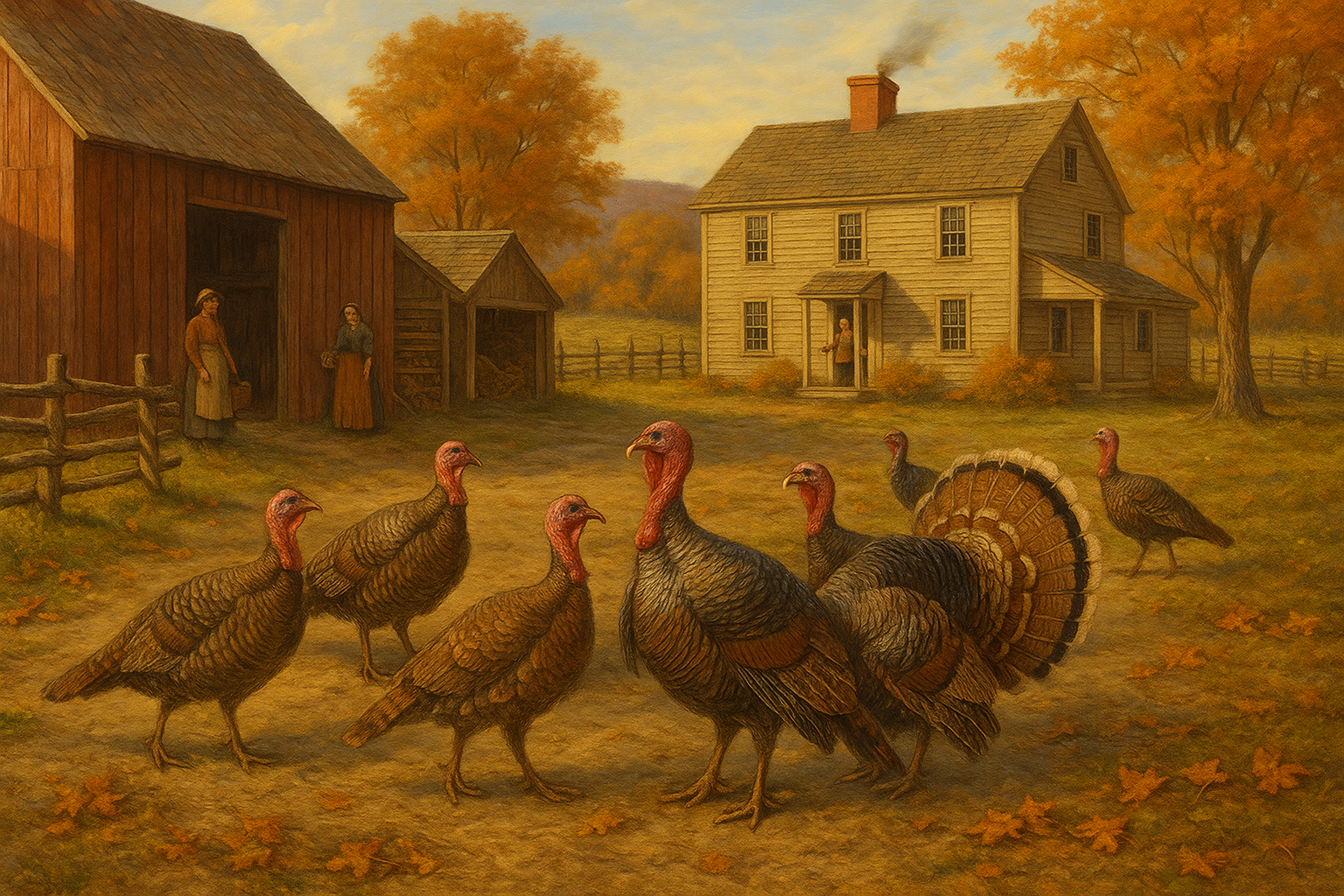
This is where turkey enters the picture. New England farmers raised turkeys seasonally, and wild turkeys were abundant. They were cheap, big enough to feed extended families, and easy to prepare in a household hearth. By 1800, the New England Thanksgiving table had standardized on turkey the same way Southern tables standardized on pork. The association was regional before it was national.
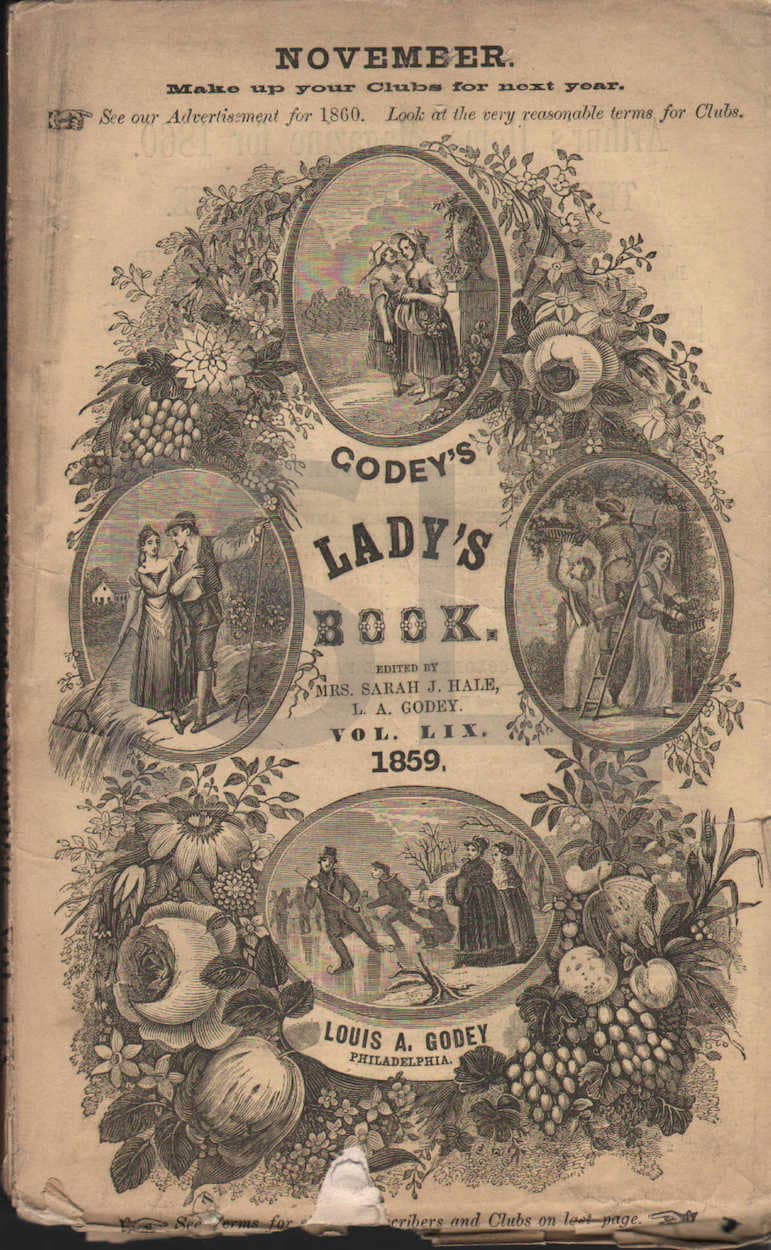
The real explosion of the turkey tradition came from Sarah Josepha Hale, the editor of Godey’s Lady’s Book, the most influential magazine in 19th-century America. Throughout the 1840s–1860s, she published endless Thanksgiving stories, menus, and recipes featuring turkey, cranberry sauce, stuffing, and pumpkin pie. Hale practically built the cultural script for the holiday. She also lobbied U.S. presidents for decades to make Thanksgiving a national holiday—Abraham Lincoln finally agreed in 1863, using the holiday to unify the fractured nation during the Civil War. When Thanksgiving went national, it carried New England’s menu with it.
Turkey didn’t become the star of Thanksgiving because it was central to the 1621 harvest gathering. It became the star because New England invented a fall Thanksgiving tradition, the turkey fit the region’s food economy perfectly, and America adopted New England’s version when the holiday went national. The bird is a product of regional tradition, cultural myth-making, and a century of marketing—not Pilgrim history.
Gratitude
This Thanksgiving, stop and practice gratitude. Not because they did in the beginning or that we should be grateful this country was built in blood (Newsflash: all countries are, America is not unique or terrible). You should practice gratitude because it’s good for you. Counting your blessings brings contentment which is the antidote we need in our instant gratification society.
Live enough life and you’ll feel significant loss. You’ll take stock of what really matters and realize that not much is required. A simple life is easy and best, with relationships mattering most.
I’m grateful you took the time to read this. I’m grateful for truth.
-Drew OUT!
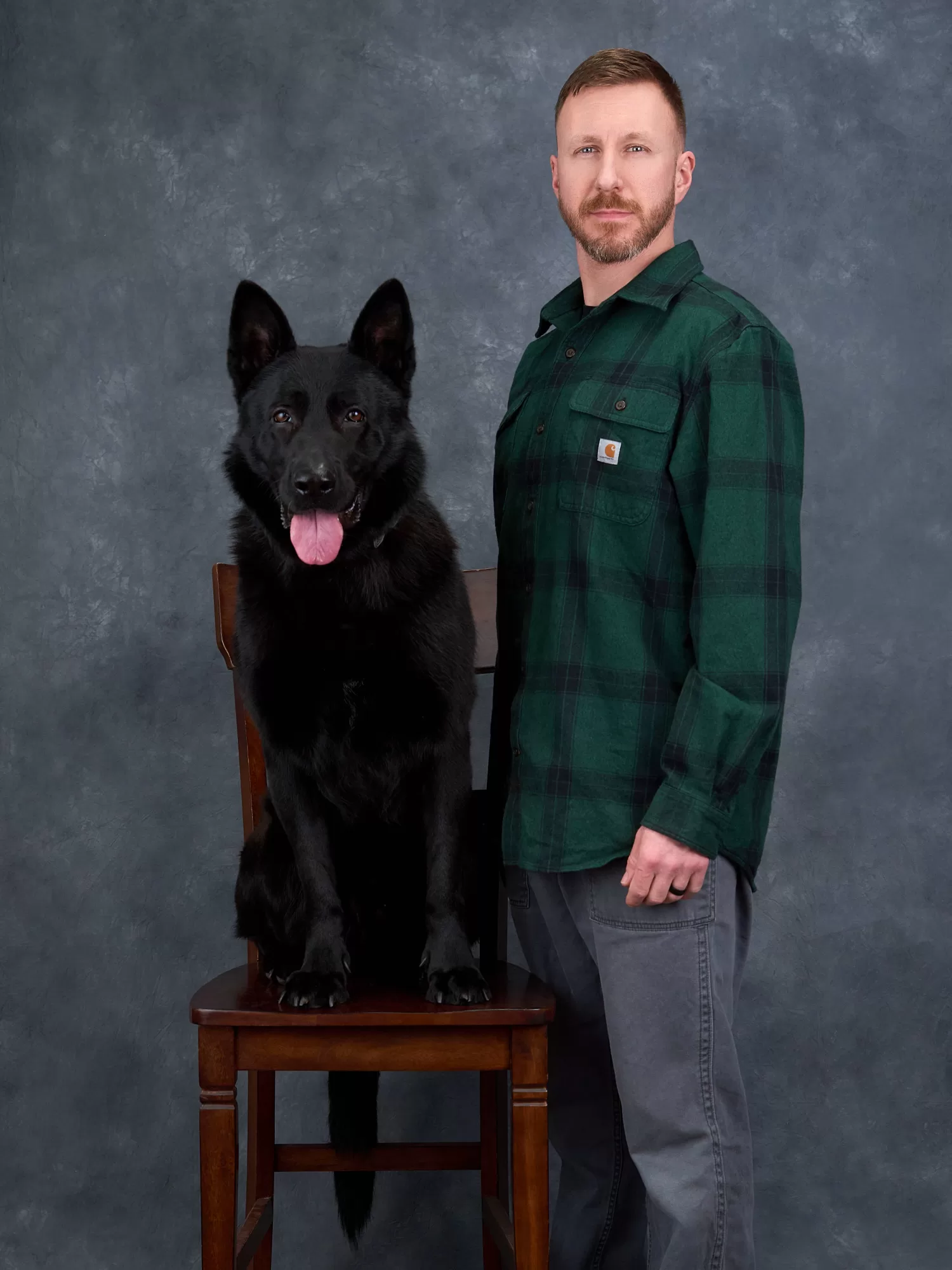
Drew founded Mental Grenade Jan 2020. He is a follower of Jesus Christ, a medically retired Marine, EOD Tech, husband, father, writer, mountain biker, photographer, facilitator, and fly-fisherman. He seeks to bridge the civilian – military divide and bring hope through honest communication about difficult issues.
These Veteran stories of struggle, adventure, and post traumatic growth need to be heard!
Join the cause to de-stigmatize mental health issues.
Please SUBSCRIBE, share our website with friends / co-workers, and support us by donation or at the STORE.
TiffanieG
November 16, 2025 22:10Happy Thanksgiving to you and yours.
Drew
November 17, 2025 10:55Thank you! I pray that you and yours enjoy the day.